
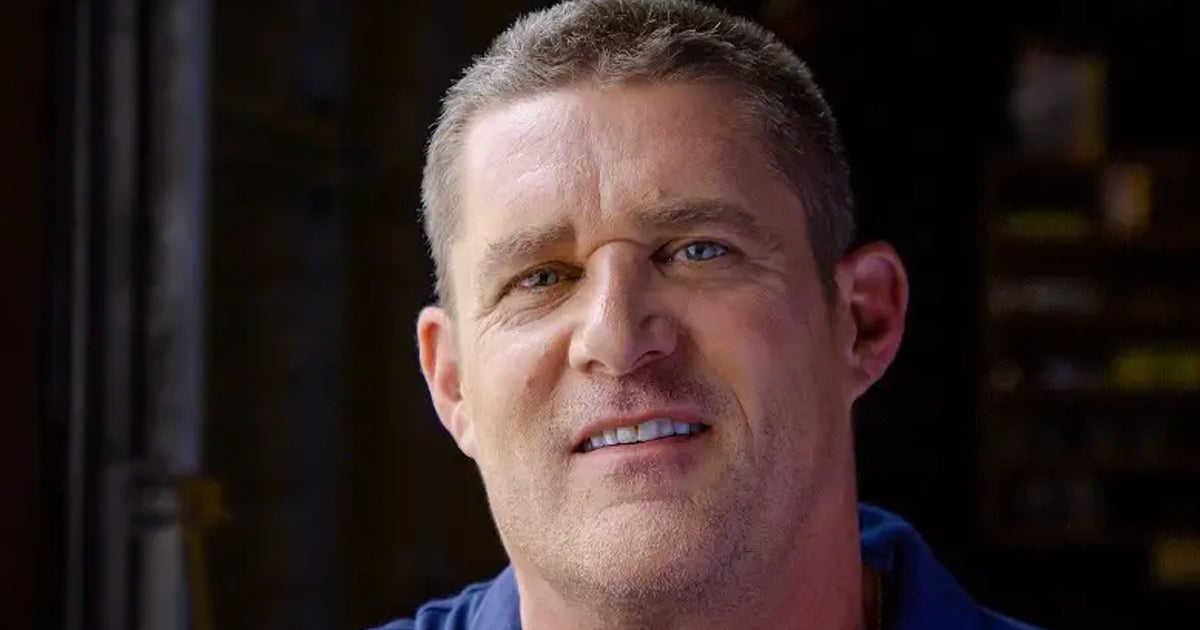
“Be creative 99% of the time” – Glen Schofield on how creativity can help fix AAA industry woes
The relentless grind of studio layoffs has not paused in 2026, and opinion pieces on the demise of AAA games are a dime a dozen. Proclamations on how to turn things round routinely call for embracing smaller AA and indie games. However, much of the discourse has offered little more than the demonization of AAA games as a genre, and by extension the teams behind them.
Glen Schofield is having none of it.
“Everyone is putting down AAA these days. Who do you think started every single new console or platform? It started with AAA games blasting through it,” he says, pointing out that the teams developing these blockbuster games are the ones who lead the way when new hardware arrives. “The PS5 didn’t come with instructions.”

Schofield is a veteran of AAA development. Starting his career as an artist for studios like the now-defunct THQ and Absolute Entertainment, he went on to direct games in the Gex and Legacy of Kain franchises at Crystal Dynamics. Later, while at EA Redwood Studios, he created Dead Space, a cult classic that led to the studio’s rebranding as Visceral Games.
He eventually co-founded Sledgehammer Games and worked on the Call of Duty franchise after the studio was acquired by Activision, including co-directing Modern Warfare 3. After leaving Sledgehammer in 2018, he joined Krafton the next year as head of the newly created Striking Distance Studios, where he spearheaded the development of spiritual successor to Dead Space The Callisto Protocol. The title had a troubled development due to the COVID-19 pandemic and failed to meet Krafton’s sales expectations. Krafton subsequently made layoffs at the studio, and Schofield departed the firm last year.
“When you have that much money coming in, you inevitably give it to the wrong people”
Released in December 2022 in the late stages of the pandemic, The Callisto Protocol was unable to ride the wave that lifted video games as the pastime of choice during lockdowns. Schofield points to the largesse of this era as the root cause of the industry’s malaise today.
“During COVID, we couldn’t make AAA games fast enough. Everyone wanted a big game, because everybody was sitting at home playing games. Billions of dollars poured into the industry. When you have that much money coming in, you inevitably give it to the wrong people,” he says, adding that by wrong he doesn’t mean bad, just inexperienced.
“I look at who they are (and some of them I know) and I think, ‘He’s 10 years away, she’s 5 years away from being able to do this’. They’re handed a studio and a game at the same time,” he explains, contrasting it with his own trajectory. “I’ve been doing that for a long time, so I’ve had the opportunity to work my way up to that.”
The right people
The solution for Schofield is obvious: Finding the right people for the right positions, instead of throwing a creative into a management job, or vice versa. He points out that the film industry “gets it right quite a bit,” because even when they hand a big franchise to a new director, it’s usually to someone with a proven track record.

“The due diligence by the people who are investing is terrible,” he adds. “Think of Bungie! They were overpaying, and they weren’t paying the right people in many cases. All you have to do is find who the true creative person is, as opposed to the person who just says they’re creative. There are a lot of people who copy very well. The non-creative people just have to scratch the surface harder to find some creative people that in turn will help them hire the right creative people.”
Schofield says that in his experience, those around him only want him to be the creative guy and point them in the right direction on the creative side. “And so I surround myself with people who can take care of the business side, who are the best at that, so that it allows me to do my thing. You have to set up studios like that, you need creative people and you need management people.”
“All you have to do is find who the true creative person is, as opposed to the person who just says they’re creative”
Assuming the right people are found, how big should the team be? One of the main criticisms levelled at the industry these days is that development teams are just too big, something that has been reflected in the neverending rounds of layoffs as a form of course correction. Can we make the same games with less people? Schofield is sceptical, mainly due to the inherent complexity of AAA games.
“My Call of Duty games had three modes, but nobody thought of them as modes. We had to treat them as a whole game. Eventually I had over 100 people each on single player and multiplayer, and about 50 on zombies. We couldn’t go smaller than that because AAA games are supposed to use the latest technology. Anything from Nvidia or the console makers, we had to show.”
Uses of AI
This push to implement the latest technologies is now more evident than ever with AI, but Schofield is unconvinced it will effectively replace human labour in game development.
“I hear people saying soon you’ll be able to make a AAA game with 20 people because of AI. I want to believe it, but when I’m working through one of my levels, I’m always going, ‘Move that pixel over. That should come down. I want more wires. I want two blue ones there. And I want this exactly here’. And then we’re sitting there adjusting the camera. We’re doing this day in and day out, all the time. Now imagine that with the code, the art and everything else. It’s about being nuanced to hell.”
“I wish artists would take notice that this is a great time to learn some form of AI”
He adds that he doesn’t see AI in its current state as capable of the same nuance, but that’s not to say he’s against it. Schofield has been an enthusiastic user of generative AI program Midjourney for years, a reminder that aversion to the technology is not universal among artists.
“I wish artists would take notice that this is a great time to learn some form of AI,” he says. “In five years people will be coming out of school who know AI, while artists sit back saying, ‘I’m not doing it’. People said the same thing about performance capture and motion capture. I even had a couple of people quit because they were against it, which is the same thing I’m hearing now. They say it steals artists’ work. Too late! It’s out there now.”
That said, he believes the industry is looking at AI purely as a cost-saving measure, which ignores a vital part of the equation.
“All I’m hearing is that we have to make development cheaper. We have to spend less money and we have to do it with fewer people. One word I don’t hear in any of that is ‘creativity’. You have to be creative 99% of the time,” he says, pointing out that making a new game requires a huge amount of new characters and other assets, so developers need the tools to create them.
“That’s what [AI companies] are making, tools to make my characters faster and animation better and all that. I’d like to see the integration of all of it, hopefully within one of the big engines. That’s a lot of work, to integrate all these freaking tools that are going on. And these tools, will they make us more creative? Yes, in some ways they will. But do you think the animators are now gonna go home after four hours because their job is faster? No! We’re gonna be putting more and more stuff into these games, because we have more time.”

On top of that, Schofield worries about the cost burden these tools will impose on developers, particularly if (as he hopes) they become integrated in the big engines many studios are dependent on.
“I’m a gamemaker, not a toolmaker,” he says. “So I’m gonna buy the tools or rent them, or it’s gonna be a subscription. Do you think they’re gonna give away the tools for free? No freaking way! They’re gonna be freaking expensive. Everyone is gonna want their money back, and they know they have a short window to get it back because some of these AI companies are gonna fail. And then we’re gonna need to hire AI people to implement everything, and they’re gonna be expensive too.”
Timing
Given that, the need to maximize the chance for success becomes even more imperative, but Schofield says publishers have been dropping the ball more often than not when it comes to a crucial decision that has a sizable impact on a game’s fortunes: release timing.
“With all this money that came in [during the pandemic], you now have too many AAA games at Christmas, as opposed to a few plus something from Nintendo. There are no new people in the market, so if there are too many games out at once they’re gonna fail. And so everyone tries to get out of the blast radius of any big game,” he says, highlighting the almost comical situation of myriad studios trying to stay out of the way of the upcoming launch of Grand Theft Auto 6.
“You just can’t ship that many games at the same time”
“You don’t wanna be near it. Yes, it’s gonna bring people back, and I think that’s great for the industry, but not many other games are gonna be sold. It’s the same way when Call of Duty comes out, everyone gives it a couple of weeks. You just can’t ship that many games at the same time.”
Schofield adds that other time windows should see more releases, offering early October and parts of the summer as suitable for a more spaced out release calendar, which would increase the chances of a breakthrough for more than a handful of big publishers. Anything that tips the balance in the favour of more developers is a positive. After all, he says, finding success in the AAA arena is something that only happens when the stars align.
“To make any game that’s a hit, and there are only so many a year, you have to get everything right, and I mean everything. You have to have a good story. Then you need to put a passionate crew together, some seasoned veterans in there along with highly talented people right out of school. And then you need a great marketing campaign by a great marketing team, with a company that’s behind you and trusts you. You need good leadership. Everything and everyone has to come together.”




Add comment