
Why Relic Entertainment wants to make games more quickly
Relic Entertainment has been on something of a roller-coaster ride over the past couple of decades.
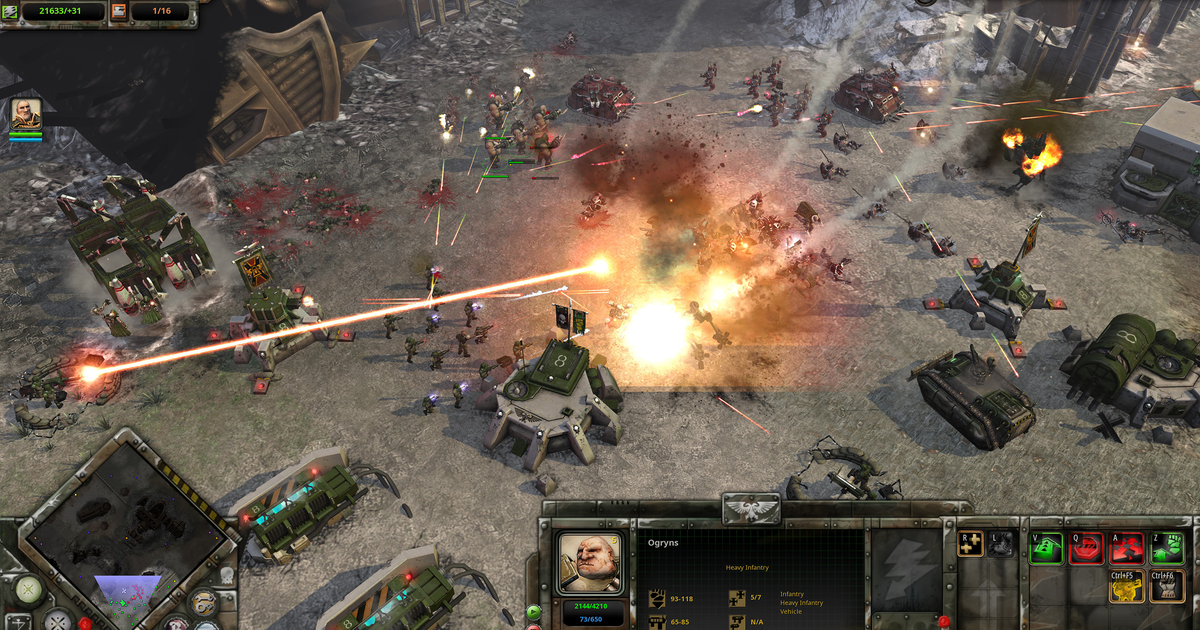
The studio leapt to fame in the late 1990s with the release of the critically acclaimed and commercially successful real-time strategy (RTS) title Homeworld, and the firm was soon snapped up by THQ. More RTS hits followed – notably Warhammer 40,000: Dawn of War in 2004 and Company of Heroes in 2006 – and Relic would go on to produce various sequels for both.
But THQ’s bankruptcy saw the studio pass into the hands of Sega in 2013, and whereas RTS games ruled the PC roost in the 2000s, they have since become a much more niche market concern.

Then, in March 2024, Sega announced it was selling Relic. Justin Dowdeswell, Relic’s CEO, says he was aware that “things were shifting” some time earlier, at the start of 2023. “There were a lot of layoffs in the industry,” he says. “That was in the news. What wasn’t in the news was in addition to the layoffs, a lot of contract work was also going away, and that had an impact on our external work that we were doing.”
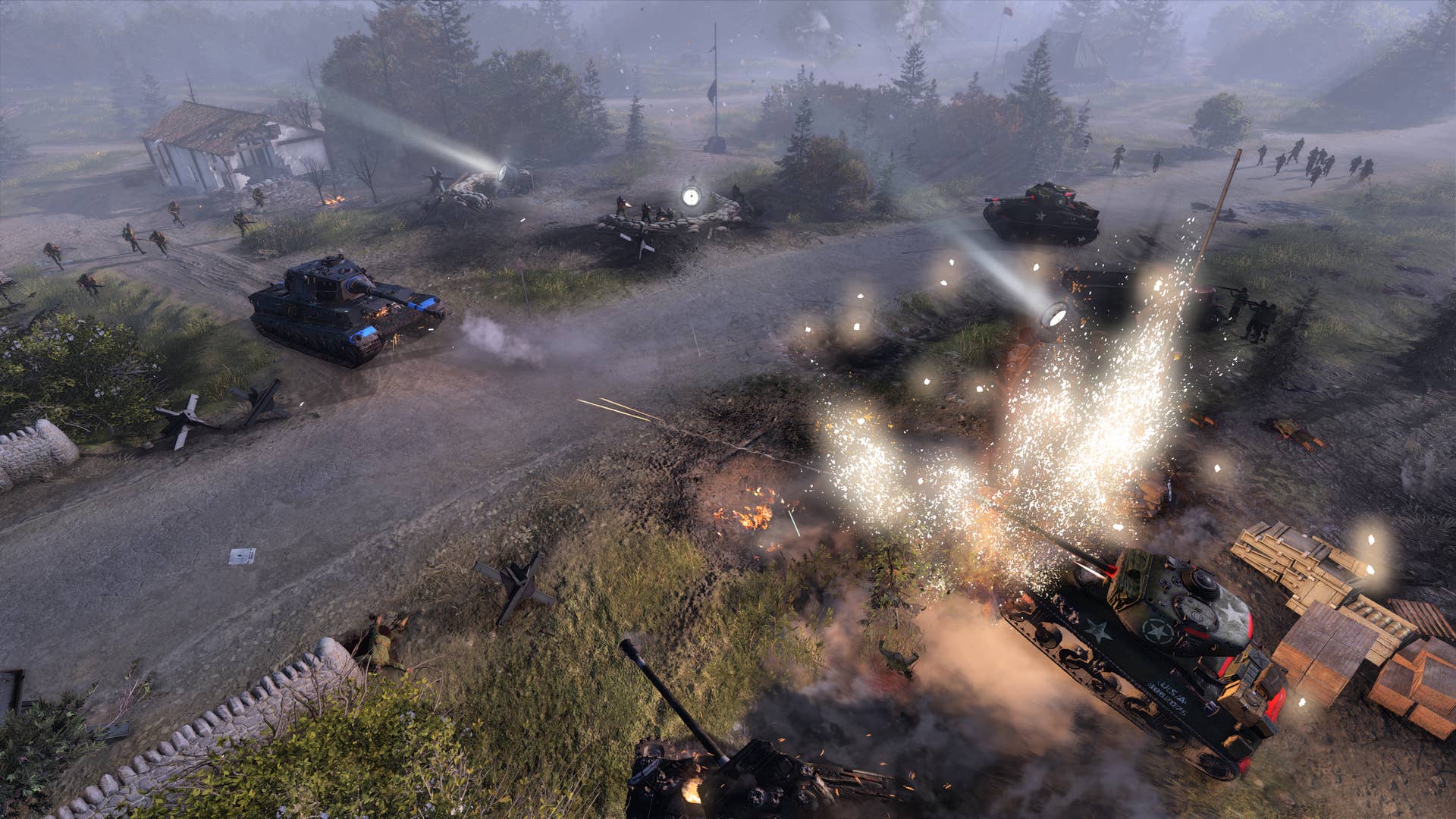
At the same time, Company of Heroes 3 got off to a rocky start in February 2023, with PC Gamer calling it “seemingly unfinished.”
“It’s our fault, but we didn’t quite have the level of polish that the players expected at launch,” says Dowdeswell. “We aimed too high, didn’t meet the bar, and didn’t take the time to get it there before launching it. And along the way, we built the player expectations, the justified player expectations of the franchise.”
All of the above put a “huge amount of pressure” on the business in regards to “sustaining the size of studio we were in,” he says, which led to some “hard conversations.”
“I don’t think they were unique to Relic or Sega, I know that they were happening everywhere. I can’t speak for Sega, but I know their focus shifted as well with the acquisition of Rovio. So we actually had an opportunity to strike out on our own in a way. It just so happened it was at the worst time possible to be available as a studio.”
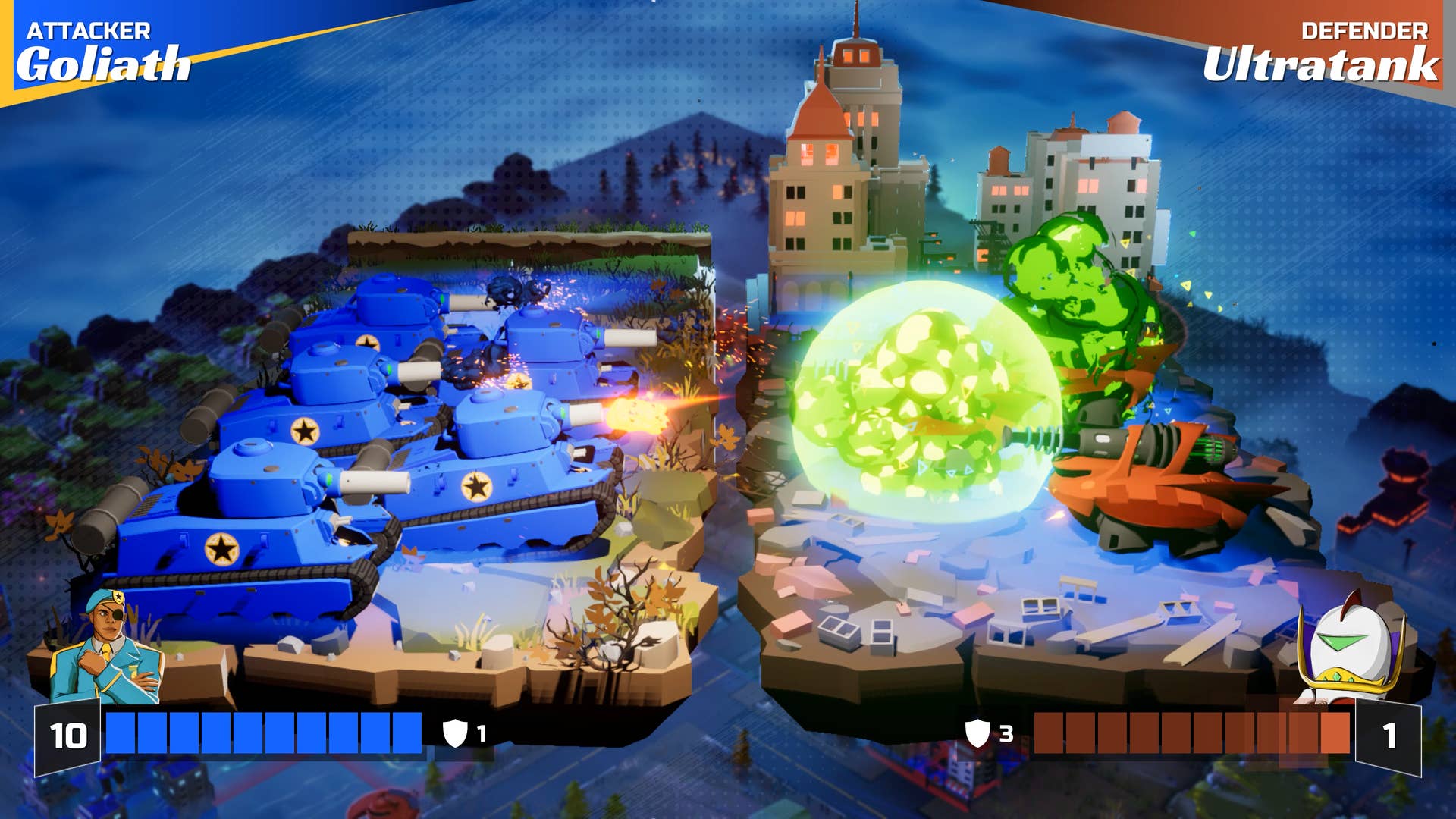
Relic announced a wave of redundancies after parting ways with Sega, and sought a cash injection from the private-equity firm Emona Capital, which now owns the developer. Going forward, Dowdeswell has the unenviable task of ensuring that the trimmed-down studio remains sustainable, with a new business strategy that partly involves focusing on smaller-scope titles, like Earth vs Mars, as well as making games more quickly.
But he has steered the studio through tough times before.
Indie spirit
Ahead of joining Relic in 2013, Dowdeswell worked for Next Level Games, the Canadian studio behind Super Mario Strikers on the Gamecube, and before that he was at Electronic Arts.
“So I’ve had a mix of bigger companies and then indie studios,” he says. “And I felt that gave me a bit of a taste of not only how to navigate a bigger company, a bigger organization, but also from the indie side, what it takes to keep the lights on.”
He was excited to get the opportunity to lead Relic – which had just been acquired by Sega from the ashes of THQ – feeling that the studio had a “ton of potential” and some “amazing talent.” But he admits he got off on the wrong foot with the team.
“What I didn’t foresee – and I should have – was basically I joined with this excitement, [but] the rest of the studio had just been through the bankruptcy of their parent company, and had been through a lot. Even though they were alive under Sega, they weren’t all with me.
“So when I was like, ‘All we have to do is grab the wheel! The future is ours! Come with me!’ [it was met with] crickets. And like I said, I should have anticipated that.
“What it took was deliberate discussion of the problems, talking about what we would do to fix them, actually doing the things that we said we would do to fix them, having those things work to fix the problems, and then repeating that cycle again. And over time people started to realize that actually this was our time. The doors weren’t about to be closed. We really had a chance.”
Dowdeswell was all too aware that Relic had all of its eggs in one basket. “Our business was basically selling premium-priced, traditional, land-based, two-sided RTSs on PC,” he says. “There are other genres, there are other platforms, there are other IPs, other business models, and so I wanted to see where we could stretch.”
He began looking for groups to work with and provide expertise about potentially exploring new areas. “Back then, […] everything was going free to play, and so [I thought], ‘How do we partner with someone to give us some knowledge?'”
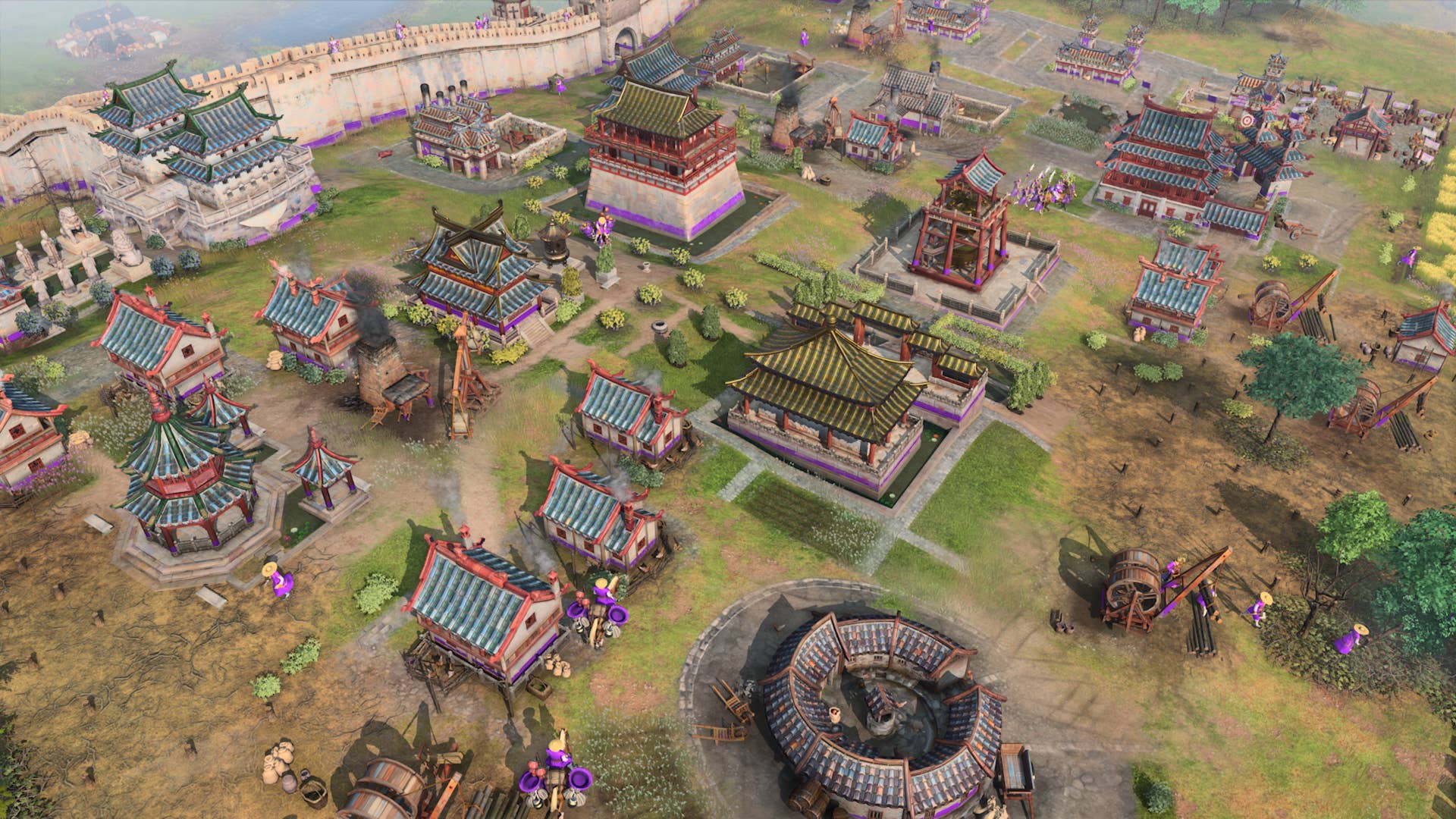
But what happened, in a sense, was Relic ended up back in its same-old comfortable groove. The conversations went down a “smaller and smaller funnel,” until eventually it was “conversations with Microsoft to make Age of Empires,” Dowdeswell recalls. “Which is funny, because it wasn’t new IP, it wasn’t a new platform, it wasn’t a new genre, it was not a new business model. So it literally checked none of the boxes – but it was Age of Empires. So we were like, ‘Yes, yes we will do this’.”
Microsoft announced Age of Empires 4 in 2017, and later set up a new internal studio, World’s Edge, to handle the IP. “We built a very strong partnership with the World’s Edge group at Microsoft,” says Dowdeswell. “For all the ways that a work-for-hire relationship can work out, this was a fantastic outcome. A ton of trust. [We] went through ups and downs, but went through them together, and there was a shared goal from the start to finish, and that felt good.”
When it was eventually released on PC in 2021, Age of Empires 4 received a warm critical reception. But it didn’t help Relic to diversify or explore new areas. Maybe that’s OK, though. What’s wrong, after all, with playing to your strengths?
“One of the things that we have going for us is an incredibly strong, continued fan base,” reasons Dowdeswell. “The monthly active users of our games stays pretty consistent, and they’re passionate.” He says the fans’ loyalty has carried them through. “But definitely, the genre isn’t where it was in the early 2000s: that was a very different time for RTS.”
Going it alone
Now out from underneath the protective skirts of Sega, Relic is having to face up to the “business realities of keeping everything going”, says Dowdeswell, who says he tries as much as possible to share data with Relic’s employees on how the business is faring.
This is important to provide context, he says, “so decisions that I may make and communicate to the studio are potentially easy to understand if I can illustrate the thinking and rationale that went behind those decisions. I think that helps everyone.”
Becoming a smaller, independent developer has also taken a bit of adjustment. “Everyone’s wearing multiple hats,” says Dowdeswell. “Everyone’s doing a lot, and if you ever ask the question, ‘Who’s responsible for this?’ there’s no answer. You just basically put your hand up.”
But there are perks to being small. Dowdeswell says one of the advantages is that everyone can be closer to the games the studio makes. For a while in his career, he says, he was “too far away from the actual making of the games” to feel like he was contributing to them in any meaningful way. “And I feel like now I’m much closer,” he says. “That part’s a great feeling.”
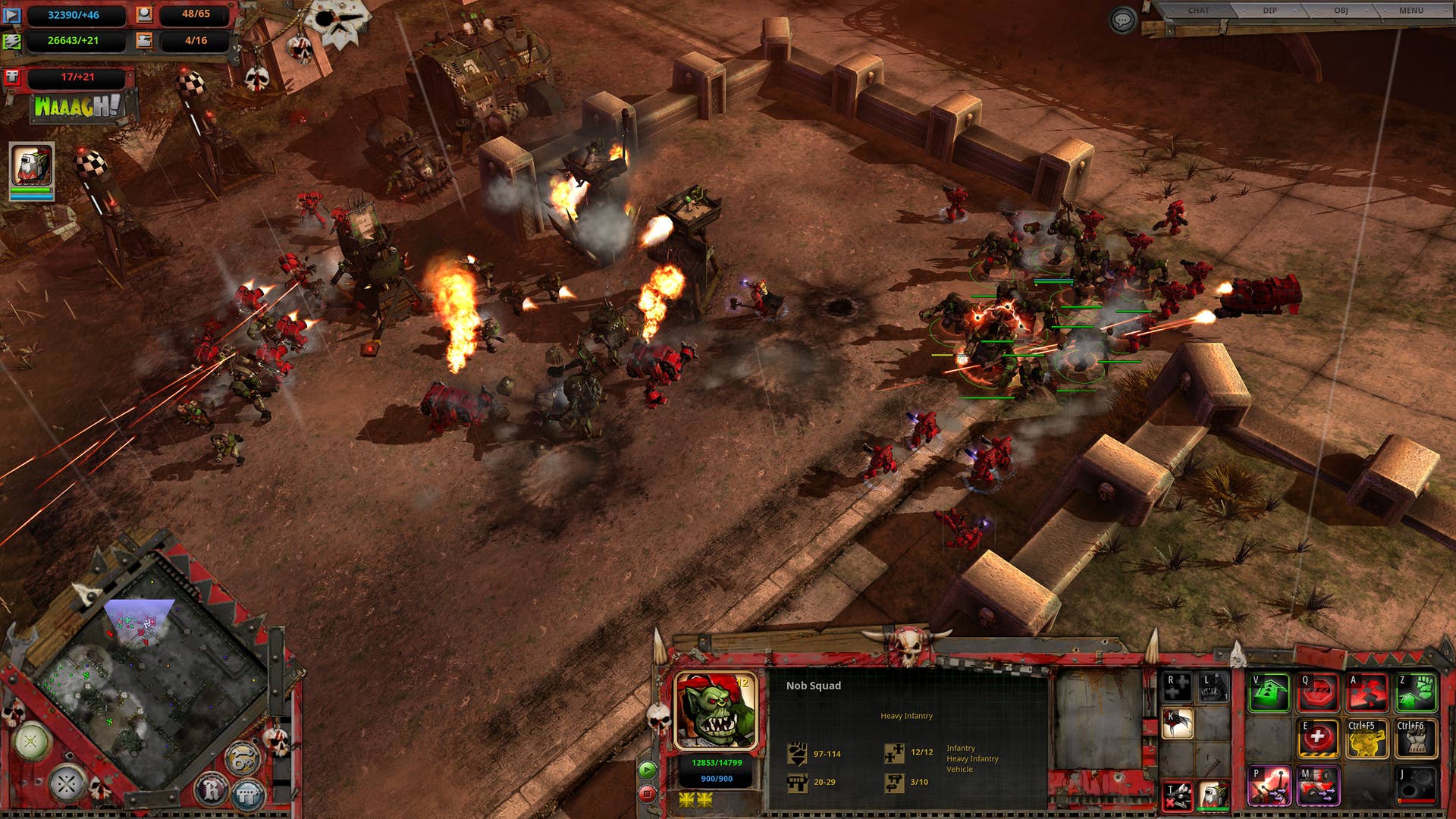
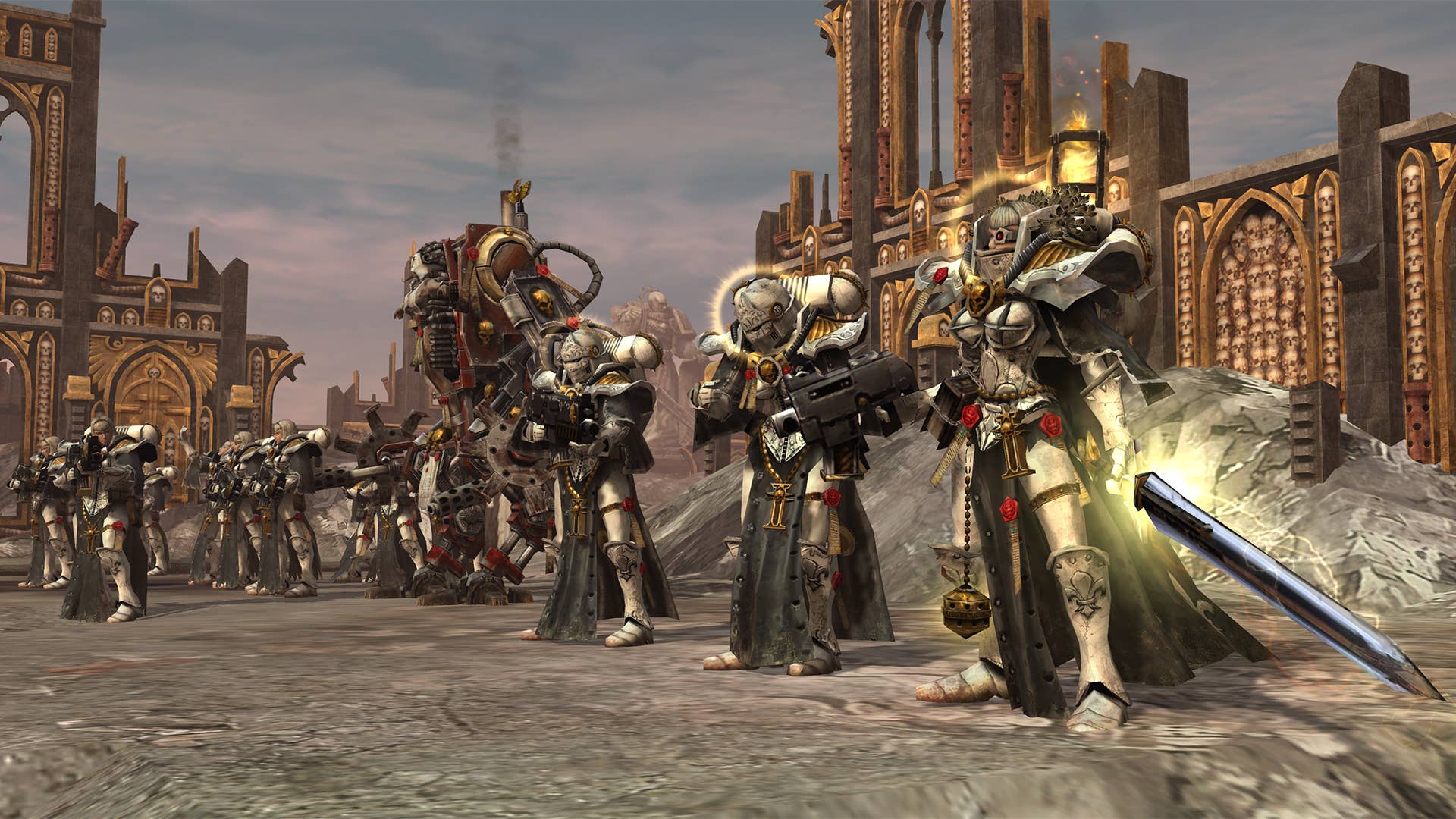
There’s also the fact that Relic is now self-publishing games, like the recently released definitive edition of Warhammer 40,000: Dawn of War – something that is both exciting and daunting.
“We’ve been developers, game makers, that’s what we do,” says Dowdeswell. “And we don’t really have much exposure to the rest of the business – the publishing side, the manufacturing side – and there’s a lot that goes on.”
But he sees it as an opportunity. “We’ve had to build new skills, new muscle, to do more,” he says. “We’re actively doing things with our catalogue of games, which is an important part, to me, of not only maximizing the value of that catalogue, but also doing something great for the players.”
It’s also a way to find new audiences. Dowdeswell says that the Dawn of War remaster has exceeded expectations, partly because in addition to attracting players who bought the original game, it has also attracted new players, something he says was a “surprise.”
“We’re just learning how to become a PC publisher”
But he wants to tread new ground, too. “The fact that […] Dawn of War: Definitive Edition has been so well received is great, but we don’t believe that just doing that over and over again is the answer,” he says. “Relic is one of the studios that’s well placed to chart out that course, to lay that path for where the genre goes, where strategy goes. Understanding modern player behaviour and trends is a key part of that.”
Dowdeswell says that the studio needs to ascertain where its games fall short in terms of attracting a broader audience, examining aspects like the cognitive load on players or the unit count to determine whether they are off-putting to new players, at the same time as trying to keep that “Relic scale of spectacle that players expect.”
But right now, big pivots – like adapting Relic’s games to the booming mobile market – are off the table. “We’re just learning how to become a PC publisher: I think the mobile space we know even less about, aside from being consumers,” says Dowdeswell. “We don’t want to ignore where our expertise actually lies.”
There are also the technical hurdles to consider. “Some of our games would melt phones, I’m pretty sure.”
Make games quicker
Going solo has made Dowdeswell carefully consider Relic’s weaknesses. “If we have an Achilles heel – and we probably have a few – but one would be how long it’s taken us in the past to release games,” he says.
“There’s long stretches of time between game releases, and you lose touch with the players, people lose touch with what you’re up to – and they generally cost a lot more, the longer they take.
“So part of what we need to do now is actually get to market more frequently. And it’s not about lowering player expectations of what a Relic game should be, but it is about getting to market more quickly.”
It’s a familiar refrain – Harold Ryan at ProbablyMonsters has shared similar ambitions. And it makes sense when modern games are taking longer and longer to make at the same time as the market for them is plateauing. But how do you go about making games more quickly in practical terms?
“One of the things we’ve done is really quick prototyping in the studio,” says Dowdeswell, citing the example of giving a team four weeks to explore a new idea using an existing code base and assets.
“I think there was certainly some doubt on the teams if we could actually do that, but setting that target and seeing the teams achieve it multiple times has sort of built that new… it’s not a new culture, but it’s a new belief actually, that it is possible.”
Controlling scope is another focus. “That would be the obvious project management institute answer, but it’s also the truth.”
So does Dowdeswell feel like Relic hasn’t successfully controlled the scope of games in the past?
“Of course, yeah. There’s always a reason though. When we look at each of the projects […] that have taken a long time, there’s always been a reason, and there have been conscious decisions that led to that set of circumstances that made things take a long time. But it doesn’t have to be that way.”
Dowdeswell points to how Relic has become more efficient at utilising its proprietary in-house engine. “That engine was never really maintained between different releases,” he says. “It was maintained within a franchise, but the engine that was used to ship Company of Heroes was then moved to ship a Dawn of War 2 game, and improvements were made for that. But those improvements didn’t make it back for the Company of Heroes 2 game. So there was just this investment that occurred that was lost between game releases.
“It is a new discipline that we have to instil in everyone to make sure that we don’t take longer than we need to”
“One of the best things that happened for us, really, was the decision to commit to the improvements, to the technology that went into Dawn of War 3. Those improvements all helped catapult us for the effort for Age of Empires 4, which was huge.”
Those improvements, in turn, made it into Company of Heroes 3. “And that sort of additive process as opposed to a splintering of the tech made it a lot better,” says Dowdeswell. “There was definitely some heavy technical lifting in those projects to get them done, whether it was for performance or visual,” he adds, but the idea is that in the future, those improvements will enable the team to make games faster.
“Scope is also about game systems,” he continues. “It’s about how many things you layer on – which impacts development time, it impacts design time, it impacts the iteration time, it impacts QA – and really making smart choices about how we build character differentiation or unit differentiation in a way that does not incur extra overhead […] as we increase the number of units. It’s decisions like that that will get us there.”
The bottom line is that Dowdeswell is attempting to shift Relic over to a new mindset when it comes to production processes. “It is a new discipline that we have to instil in everyone to make sure that we don’t take longer than we need to,” he says.
The question of AI
What about AI? It’s been billed as a way to make games more quickly – but what does Dowdeswell think of the technology?
“I think there are good ways to use it and there are ways to use it that probably don’t help us,” he says. “Not just in games, but I think overall, the world is trying to figure out what those ways are.
“I know that even just in workflows around the office, there are ways that make us much more effective at what we do, things that I would struggle to do before – even just reviewing something or summarizing something. I get more done. And I think that there’s something in that concept of getting more done, that’s part of where the power is.
“And for me at least, it’s not about replacing people, it’s just [about taking] some of the slightly more annoying things off the list and getting them done more quickly. There’s power in that.
“For me at least, it’s not about replacing people”
“I think on the actual game development side, we still need people making decisions, we still need people coming up with ideas, we still need people creating an architecture.” For Dowdeswell, the best uses of AI are “on the periphery” rather than at the core of game development. He pictures AI being used as a helper, rather than a replacement: a tool for “augmenting skills that we already have.”
Whether you welcome it or not, we “can’t ignore” AI, thinks Dowdeswell. “There’s no good outcome from that. And so I think understanding how it serves us and where it serves us is the starting point. And then as we gain experience with it, understanding where we want it to stop, I think that’s important.
“There’s also the player and public side of it, which is, ‘How is it perceived?’ And I don’t think we have an answer for that, either. And so I think we’re in the middle of figuring it out collectively.”
The new paradigm
The past few years have been a tumultuous time, not just for Relic, but for the games industry as a whole. One trend that has emerged is the dire need to push down AAA game budgets, which have ballooned enormously over the past decade or so.
“I think that the economics of that no longer work,” says Dowdeswell, “and it’s led us down some dark alleys, not just as a studio, but as an industry. So that puts pressure on teams to scope down, [to] maybe not go all the way on every feature and every effect.
“And it’s related to price point as well, and setting player expectations. That triangle of price point/value proposition/player expectations has to be balanced and managed somehow. And I think the secret to that, which we are still getting better at, is being close to the players.
“One of Relic’s greatest strengths is that it’s a 28-year-old studio, and one of Relic’s greatest weaknesses is that it’s a 28-year-old studio. I mean, a lot of what we are evolved during a time when your connection to players was almost nothing. Whereas now, your connection with players can be almost anything. And that is an entirely different world, and we haven’t made the most of that yet.”
Today’s world is also much more unpredictable. “You don’t know what’s going to work,” muses Dowdeswell.
“I think every launch is probably nerve wracking for the developers and the publishers, because there’s the love for the classic games that seems to be growing every year, and at the same time, there are some new small games, new IP, that just explode. They just explode into the market and do really, really well. And I think our belief in the predictability of outcomes has gone down.”
On top of all this, there are signs that the wider games industry has become a mature market, with growth slowing down or disappearing. But Dowdeswell thinks there are still opportunities.
“Our belief in the predictability of outcomes has gone down”
“For a while it felt like there was growth, and everyone rode the growth wave. Now, it feels like there’s potentially some growth, but few ride the growth wave. The way through that is being experts at something, I think, focusing on what you’re good at. And maybe being aware of trends, but not chasing every single one. I think that’s what I believe in for the studio.
“What resonates for me is: we are Relic. We’re not the Relic we were 25 years ago. We’re not even the Relic we were 18 months ago, in truth. But if we focus on the things that we’re expert at and the things we believe in, that we’re passionate about, and tackle all the problems of making games faster, making them with distributed groups, and [asking] how does AI fit into all this? If we can solve all that, there is a market for games that play well and speak to an audience. And I feel proud and fortunate to be part of Relic.”






Add comment